The first-shift briefing
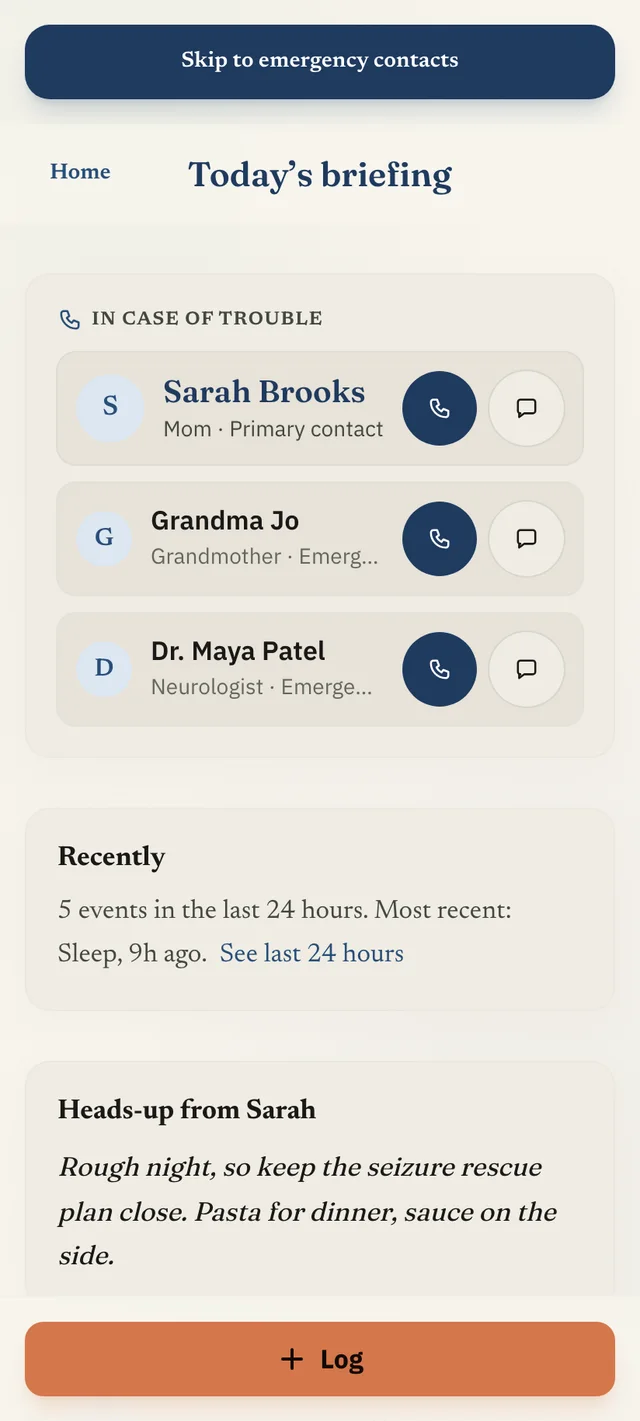
One screen that answers the first sixty seconds: who they are, what to know, meds due, must-dos, and a heads-up note from the family. The next caregiver walks in already up to speed.
Briggzy is one warm, shared space for everyone who helps care for the person you love. What happened today, what's due next, what to watch for. No phone call, no digging through the group chat.
And most of it still runs on group chats, paper notes, and one person's memory.
National Alliance for Caregiving & AARP, Caregiving in the U.S. 2025
Briggzy gives back the three things complex caregiving steals: time, calm, and the next person knowing what to do.
My name is Brett. My son Briggs was born with a medical profile that takes a small village to coordinate. Family, sitters, therapists, nurses, doctors. Everyone needs to know what just happened and what comes next.
For years we lived in scattered group chats and shared notes that never quite synced. Something important was always one handoff away from being missed.
So I built Briggzy: one shared space that always knows where care stands. The next caregiver, a parent, a sitter, a grandparent, a nurse, picks up exactly where the last one left off. No phone call. No scrolling through the family chat.
Briggzy is named for my son. But it is for any family with more than one caregiver, whether that means a complex medical day, a sibling helping out, an aging parent at home, or a babysitter walking in for the evening.
Briggzy is live today. My own family uses it every day to coordinate care for my son. Now I'm opening it to a few more families, one at a time.
One screen that answers the first sixty seconds: who they are, what to know, meds due, must-dos, and a heads-up note from the family. The next caregiver walks in already up to speed.
Text a secure link to a sitter or a grandparent. They're ready in sixty seconds, no download, no account. And if you want, they can log a dose or a note right from the link, so nothing waits for you to get home. You choose what it shows, links expire, and you can turn one off any time.
A private space for one person. The people sharing the day-to-day load join as members with their own account, so everyone stays in sync without forwarding messages. Caring for more than one person? Each gets their own space, and you switch between them in a tap.
Preferences, routines, what soothes, what to do if. The kind of context that usually lives in one person's head.
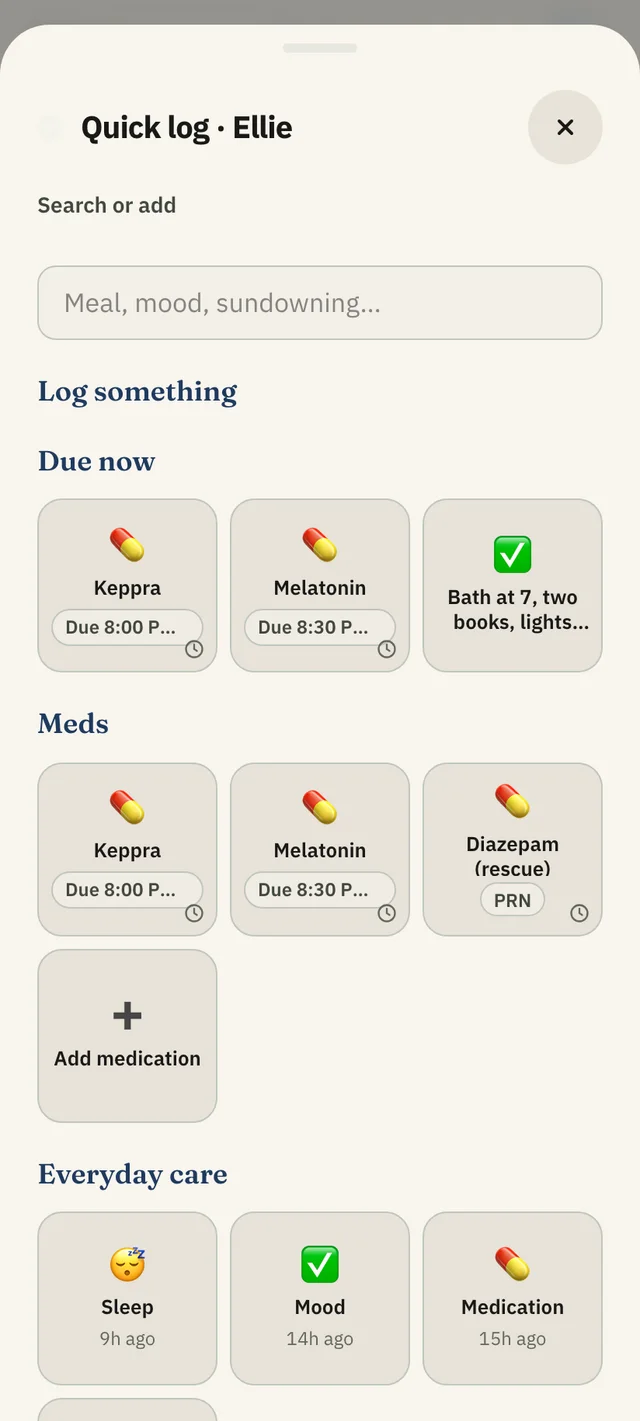
Tap to log meals, meds, naps, changes, and the moments in between. For hands that are full. Med doses keep saving when the signal drops, and anything that can't save says so instead of disappearing.
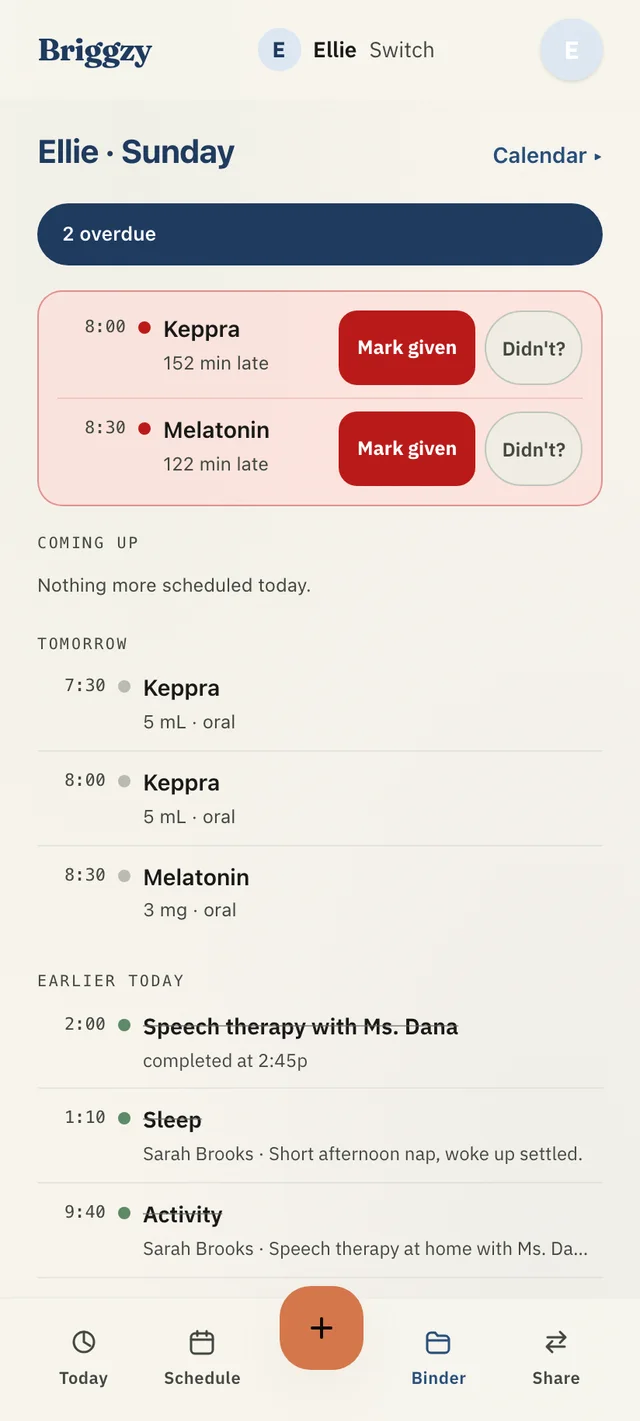
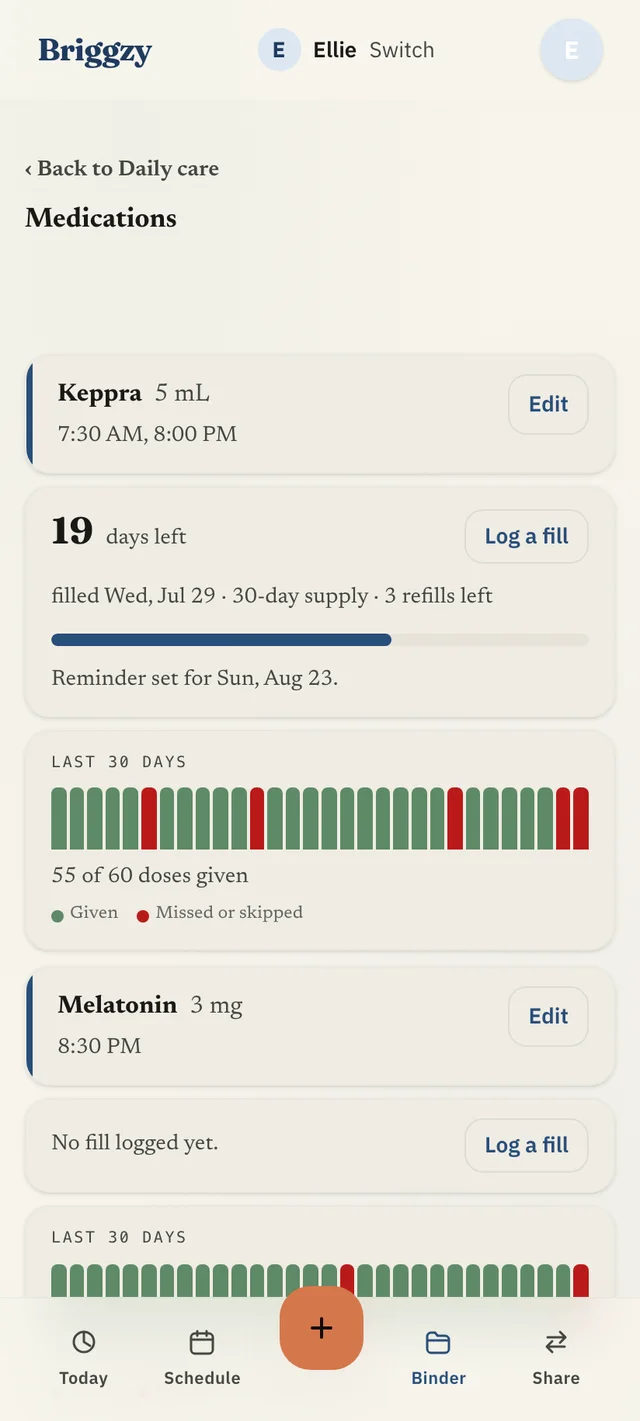
Set medications by fixed times, intervals, or as-needed, so the next person knows what's due and nothing slips between handoffs.
Step-by-step what-to-do-if plans, emergency contacts one tap from a call, and a printable emergency packet for the sitter's fridge or the ER.
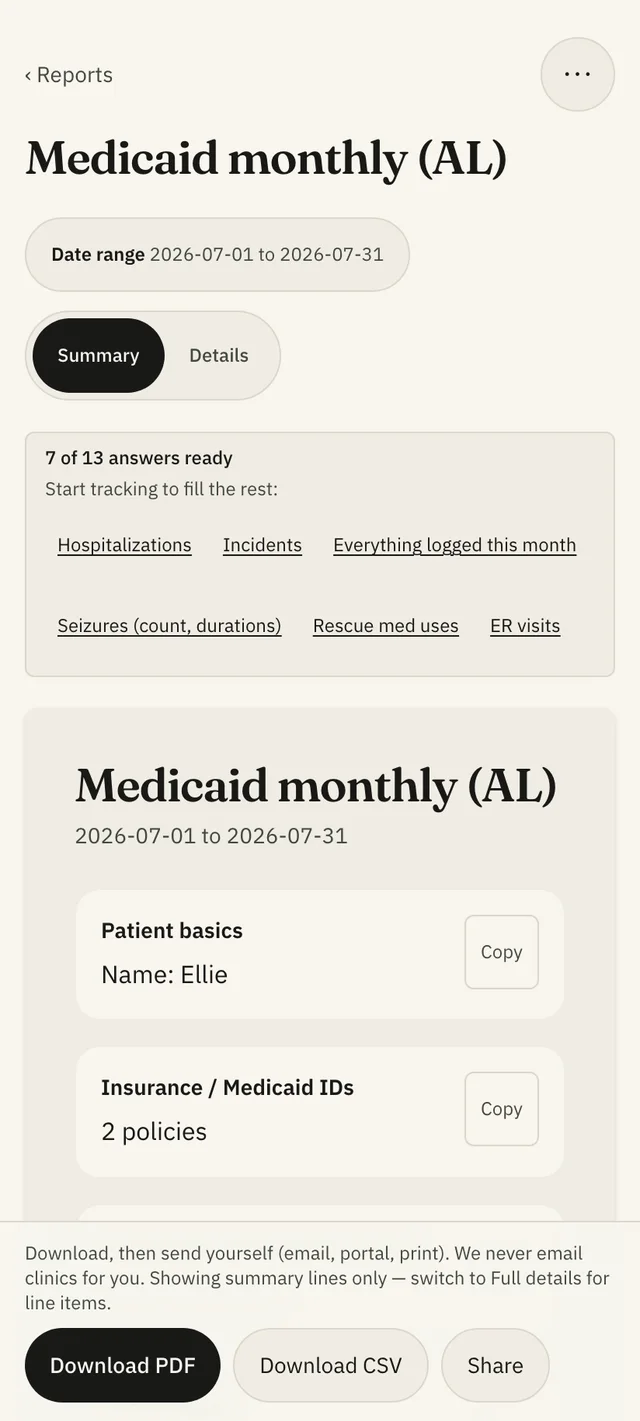
When a visit comes, build a clean visit-ready report of recent meds and events, then print it or save it as a PDF to hand over yourself. Appointments can sync to your own calendar.
One record of the whole person that becomes whatever the moment needs: an emergency packet for the ER, a clear summary for a new doctor, a prep report for the next visit.
Feeds, therapy, bath time, and scheduled meds each carry their own schedule. Whatever lands at the same time becomes one card on today's list, so the 7 PM card gets checked off step by step, or marked done in one tap. Meds start from a search of real medication names.
Sensitive details are encrypted before they're stored, never indexed by search engines, and reachable only by the people you've let in. Every entry shows who logged it, and you can see when a briefing was opened. Export your family's records any time, and if you're the one who organizes the space, you decide what happens to it.
A made-up family, but every screen below is the live product doing its job: one child, three meds, a sitter tonight, and nothing left to memory.
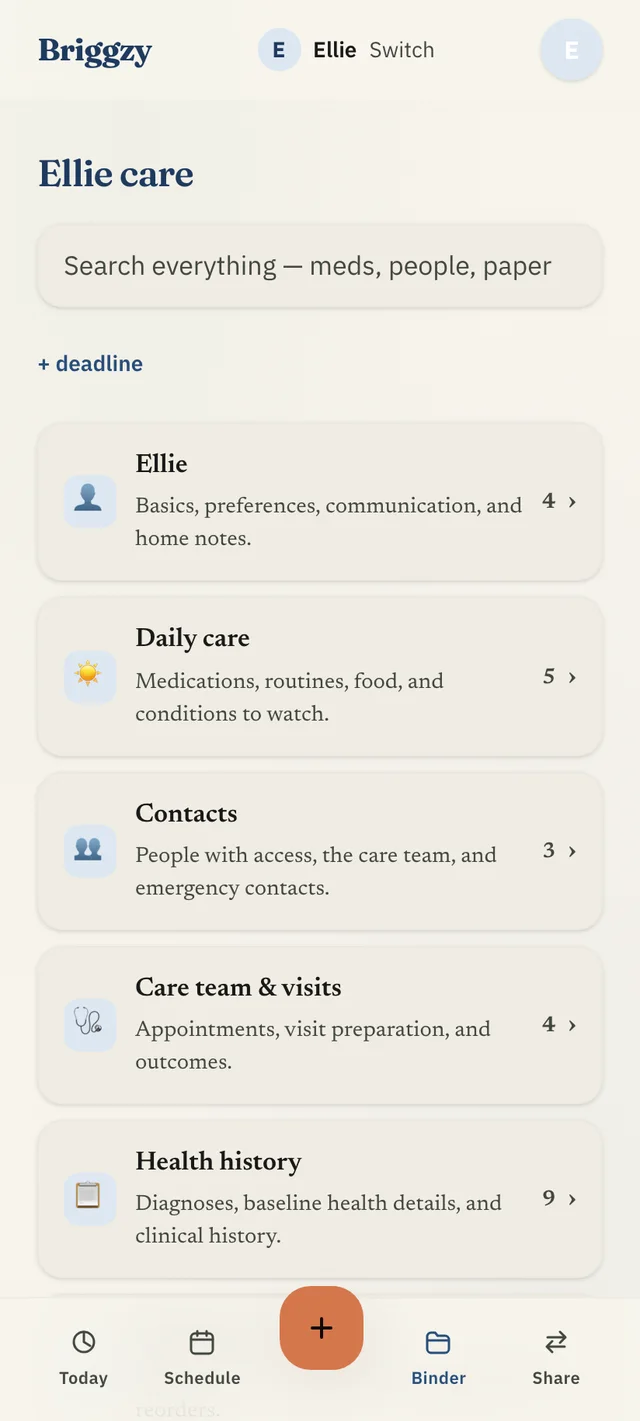
I built Briggzy because my family lives this every day. It's the tool I needed, so I made it. Now I want it to work for your family too.
Brett, founder
Journals broadcast news to the people far away. Briggzy points forward, to the next person walking in the door.
A chat is a stream you scroll and scroll. Care needs the current state: what happened, what's due, what to watch for.
No patient IDs, no cold forms, no clinical gray. Briggzy looks like home, because that's where care happens.
Briggzy is the one place that always knows where care stands right now.
Different families, same job. Someone is carrying it all in their head, and the next person needs to pick up where they left off.
Sandwich generation. Coordinating siblings, paid caregivers, and the slow change of decline.
Therapies, meds, equipment, appointments. Where the routine is the lifeline.
A spouse, sibling, or adult child carrying the load, often across a small team of helpers.
Sitter handoffs, after-school logistics, two households co-parenting. Same mental load, different stakes.
You'd be one of the first families besides my own. I'm adding people slowly and personally, choosing families so the room reflects different kinds of care: aging parents, complex medical kids, disabled adults, everyday family logistics. If this sounds like your family, tell me what you're carrying.
No mass waitlist, no bulk sign-ups, no automated emails. Briggzy is free while we're in beta. When we do introduce pricing, it'll be modest, family-sized, and shaped by what beta families tell us is fair, not a number picked in a vacuum.
You wouldn't just be an early user, you'd be a partner. If you're picked, we'll ask you to actually use Briggzy with your family, tell us what's working and what isn't, and answer a short survey every so often. Your honesty is what makes this real for the families coming next.
Really. You send a secure link and choose what it shows: emergency info only, today's care plan, or the full care summary. They open it and they're ready. If you want them to, they can log a dose or a quick note from that same link, without ever making an account. Links expire on a schedule you pick, and you can turn one off at any moment.
Free while we're in beta. When pricing arrives it will be modest, family-sized, and shaped by what beta families tell us is fair. Beta families hear about it first, long before anything changes.
Private by default. Nothing is public or indexed by search engines, and only the people you've let in can reach it. Sensitive details are encrypted, every entry shows who logged it, and you can see when a briefing was opened. Guests see only the slice you chose to share.
No, and that's on purpose. Briggzy is a family tool, built for handoffs between the people who care for someone: family, friends, sitters. It doesn't plug into hospitals, patient portals, or medical records. You can print or share a summary you made when a visit comes, but what goes in it, and who sees it, is always your call.
Yes. Download an export of everything your account can see, whenever you like. You can close your account any time: that ends your access and removes your personal details. The care you logged stays in your family's space, still credited to you, because the people still caring for that person need the history. And if you're the one who organizes the space, you settle it before you go: hand it to someone who accepts it, or delete it for everyone.
Any modern phone, tablet, or computer with a browser. Nothing to install. If the signal drops while you have it open, med doses save on your phone and sync the moment you're back, and anything that can't save tells you so instead of vanishing. Want it to feel like an app? Add it to your home screen and it opens like one.
We're welcoming families a few at a time, on a rolling basis, through September and October 2026. Ask for an invite and we'll write back either way. One person reads every note, so it may take a while. If there's room, we'll send a private link and walk you through setting up your space.
Use Briggzy with your real care circle, tell us what's working and what isn't, and answer a short survey now and then. Your honesty shapes what gets built next.
This survey is anonymous unless you want a reply. Every situation is different, and the overlap between them is what makes a real tool. You don't need an account, an email, or even your name. Leave an email at the end only if you'd like us to write back.
Just keep me posted. No pressure, no spam, just a note when there's room or news worth sharing.